PDR vs. Body Shop for Hail Damage: Which Keeps Your Factory Paint?
Published · Updated
Paintless dent repair keeps factory paint when hail dents are suitable and the finish is intact. Conventional body work may require filler, sanding, repainting or panel replacement. Choose the method after inspection, not from size alone. Neither approach guarantees resale value or lease acceptance; the completed repair must meet expectations.
What does paintless dent repair actually change?
PDR reshapes damaged metal rather than covering a dent with filler or applying new paint. Depending on the panel and access, a technician may work behind the metal with specialist tools or lift suitable dents from outside using glue tabs. The goal is to restore the surface while leaving an intact factory finish in place.
That goal does not make PDR a universal remedy. The technician needs to assess the dent's shape, paint condition, metal condition and access. Hail dents can occur near braces, roof rails and panel edges as well as across open surfaces. A complete inspection explains whether paintless methods can reach and restore the actual damage safely.
What happens during conventional body shop repair?
Conventional repair may involve reshaping metal, applying filler, sanding, priming and refinishing. More extensive damage can require a replacement panel. A body shop can also address damage outside a PDR specialist's scope, such as broken finish or other collision-related work. These methods serve a purpose when retaining the existing finish is not a suitable option.
The important distinction is the repair method, not a claim that one business category always does better work. Some facilities offer both paintless and conventional methods. Ask what will happen to each panel and why. Storm Shield focuses on PDR only, so an inspection should identify limitations rather than imply that every damaged vehicle can be handled entirely with paintless techniques.
How do the methods compare for paint and lease return?
| Method | Paint kept? | Typical process | Resale/lease return impact | When PDR is not possible |
|---|---|---|---|---|
| Paintless dent repair | Factory paint retained for suitable dents with intact finish | Inspect, access the metal, reshape with specialist tools and check reflections | May help preserve the original finish; no guaranteed valuation or lease acceptance | Cracked finish, severely stretched metal, structural damage or unsafe access |
| Conventional body repair | Repaired areas may need new paint | Assess, reshape or replace, fill when needed, prepare and refinish | Refinished or replaced panels can require disclosure; impact depends on vehicle and standards | Conventional methods may be appropriate when damage is unsuitable for paintless repair |
Use the table as a discussion guide, not a remote diagnosis. A vehicle can have different needs on different panels. Ask the technician to separate suitable hail dents from cracked paint or other damage. That distinction helps you understand which work preserves the original finish and which work would require a different facility or method.
Why does retaining factory paint matter?
The original finish is part of the vehicle's condition and repair history. Keeping it avoids the need to match new paint on a panel that can be restored without refinishing. Many owners value that, particularly when comparing future trade-in or resale options. However, paint preservation is not a numerical promise about how much a vehicle will be worth.
Buyers, appraisers and lessors consider multiple factors. A vehicle's age, mileage, previous damage, repaired condition and documentation can all matter. An excellent PDR result does not allow you to ignore applicable disclosure obligations. Keep the inspection estimate and invoice so you can describe the work accurately instead of relying on a general claim that paintless repair erases history.
When might a hail dent be unsuitable for PDR?
Paint that has cracked or been compromised needs evaluation beyond simply reshaping the metal. Severe stretching or structural damage may also limit what paintless methods can accomplish. Access matters because tools need a safe working route; an advertised technique is not a reason to drill, damage trim or take risks that were not explained in the repair plan.
Aluminum and steel behave differently, and neither material alone decides suitability. Panel design, existing finish and damage geometry all contribute. Ask the technician what makes a specific dent appropriate or inappropriate. A credible answer describes the vehicle in front of you, rather than promising that every mark can disappear regardless of paint condition.
Does insurance cover one method but not the other?
Comprehensive coverage generally covers hail damage subject to the policy, deductible and approved claim. The insurer reviews the repair scope and method. PDR can be part of an approved estimate when appropriate; conventional methods can be needed for other damage. Confirm the agreed approach rather than assuming the name of the method determines coverage by itself.
For Storm Shield, $0 out of pocket is on qualifying comprehensive claims. Deductible assistance on approved claims is applied as a discount on the final invoice. Those offer conditions are separate from technical repair suitability. An inspection and approved scope should come before deciding what your final payment responsibility will be.
What cost and time expectations are reasonable?
Depending on the size and number of dents, hail damage repair typically ranges from $3,000 to $15,000+. This is an approximate range for information, not a quote — your exact price comes from the written estimate after the free inspection. Most customers pay $0 out of pocket on qualifying comprehensive claims.
The repair work itself usually takes 1–3 days. The total time can vary depending on your insurance company — how fast the claim is approved and the adjuster inspects the car. We give you a realistic date at your free inspection and keep you updated until delivery.
PDR often involves fewer refinishing steps than conventional work, but do not turn that into a fixed price comparison or a deadline guarantee. Claim review, adjuster inspection and authorization can affect the overall schedule. A written estimate should explain the planned work; your insurer can explain where the claim stands.
Free rental car while we repair your vehicle — or we help you use the rental coverage on your policy.
What should a leased-car owner ask before repairs?
Review your lease-return standards and ask the lessor how repaired hail damage should be documented. Do not assume that keeping factory paint guarantees acceptance. Keep records of the damage, approved estimate, repair method and completed invoice. If the lessor requires a condition report or specific disclosure, obtain that guidance before the return appointment.
Ask the shop to explain the warranty in writing and how a concern about the completed PDR result is handled. A lifetime warranty covers the specified repair work; it does not replace a lessor's standards or insure future storms. Knowing the boundaries prevents avoidable surprises when another party evaluates the car later.
Where should Phoenix drivers start?
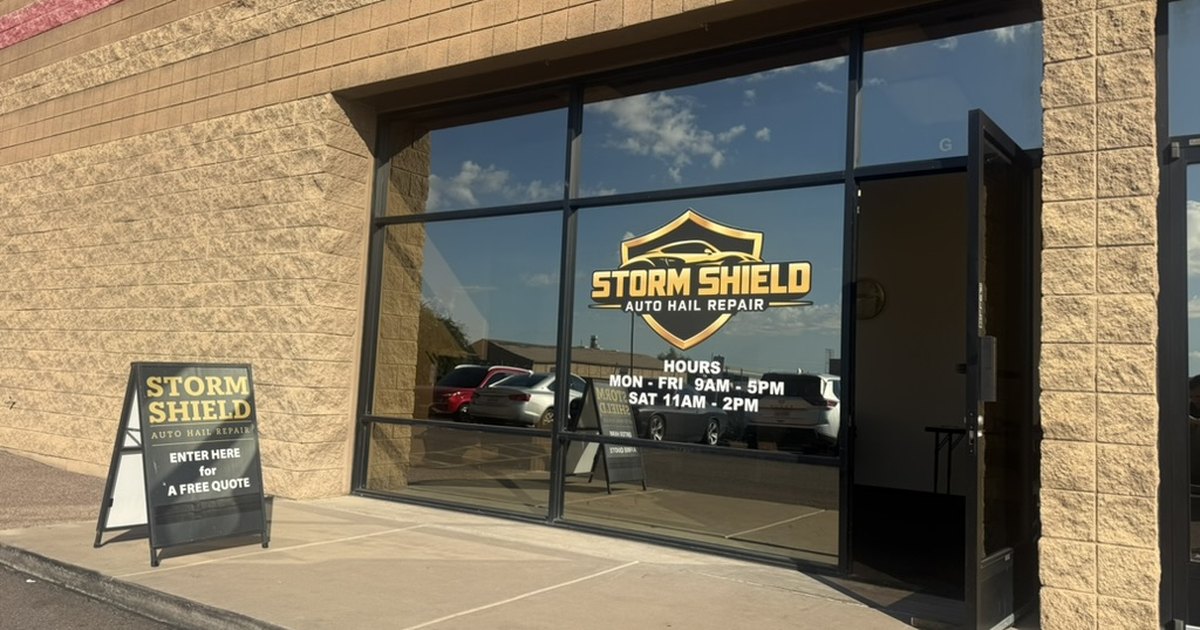
Start with an inspection under PDR lighting rather than attempting to select a repair method from a quick glance. Arizona's A.R.S. § 20-468 addresses repair facility choice, while policy terms still govern claim approval. Visit Phoenix hail repair to arrange an inspection, see the Deer Valley shop and discuss whether preserving your factory paint is possible for the actual damage.
Which sources support this guide?
- National Weather Service Phoenix — weather and storm information
- Arizona Department of Insurance and Financial Institutions — insurance consumer information
- Arizona DIFI — physical damage and comprehensive coverage
- Arizona DIFI — accidents, thefts or other damage
- Arizona Legislature — A.R.S. § 20-468, repair facility choice
What else do Phoenix drivers ask?
- Does PDR preserve factory paint?
- For suitable dents with intact paint, PDR reshapes the metal without sanding, filler or repainting, preserving the factory finish. Suitability must be confirmed during inspection.
- When is PDR not possible?
- Cracked paint, severely stretched metal, structural damage or access that prevents safe repair can make PDR unsuitable. The technician should explain the limitations after inspection.
- Does PDR guarantee a particular resale or lease-return outcome?
- No. Preserving factory paint can be helpful, but resale value and lease-return acceptance depend on the vehicle, completed repair, disclosure requirements and the buyer or lessor's standards.
- How long does paintless hail repair take?
- The repair work itself usually takes 1–3 days. The total time can vary depending on your insurance company — how fast the claim is approved and the adjuster inspects the car. We give you a realistic date at your free inspection and keep you updated until delivery.
Ready to Get Started?
Discuss your inspection and approved repair plan; offers apply on qualifying comprehensive claims.
Phoenix hail repair and inspection(888) 484-4245